THE EXISTING SIGN
Essential, but easy to miss.
It contains the right information, but only once the person is already standing at the correct place.
OPEN BRAILLE BEACON / CONCEPT SYSTEM
A silent wall tag and a wearable haptic receiver, to help people locate existing tactile and Braille signage.
Concept visual · Device details subject to validation
Scroll to exploreThe problem is discovery: tactile signs are useful only after someone has found the door, elevator, exit, stairway, information point, or Braille sign that carries them.
It is not indoor navigation, obstacle detection, or a replacement for a white cane, guide dog, orientation and mobility training, tactile signage, or personal safety judgment.
THE EXISTING SIGN
It contains the right information, but only once the person is already standing at the correct place.
PHONE-FIRST TOOLS
They may require a screen, audio, headphones, an account, or a reliable connection when a simple physical cue would do.
INDOOR NAVIGATION
It can need maps and infrastructure—and should not imply a precise route, direction, or guarantee of safe passage.
02 / THE CUE STAYS WITH THE SIGN
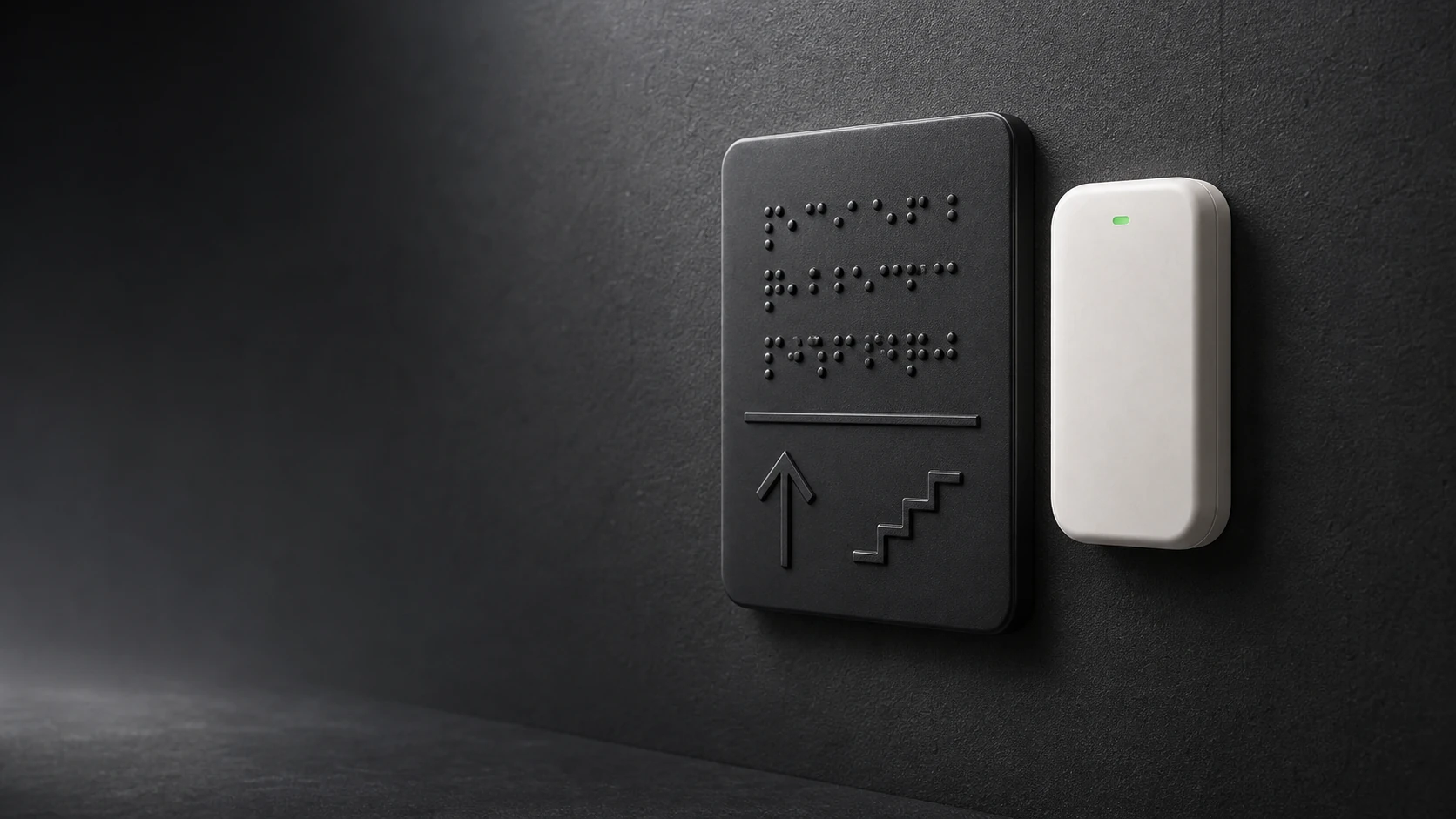
A compact beacon sits beside the existing tactile sign. The receiver helps someone locate that point; the tactile sign remains the source of information.
Concept visual · Installation details subject to validation
WALL BEACON TAG
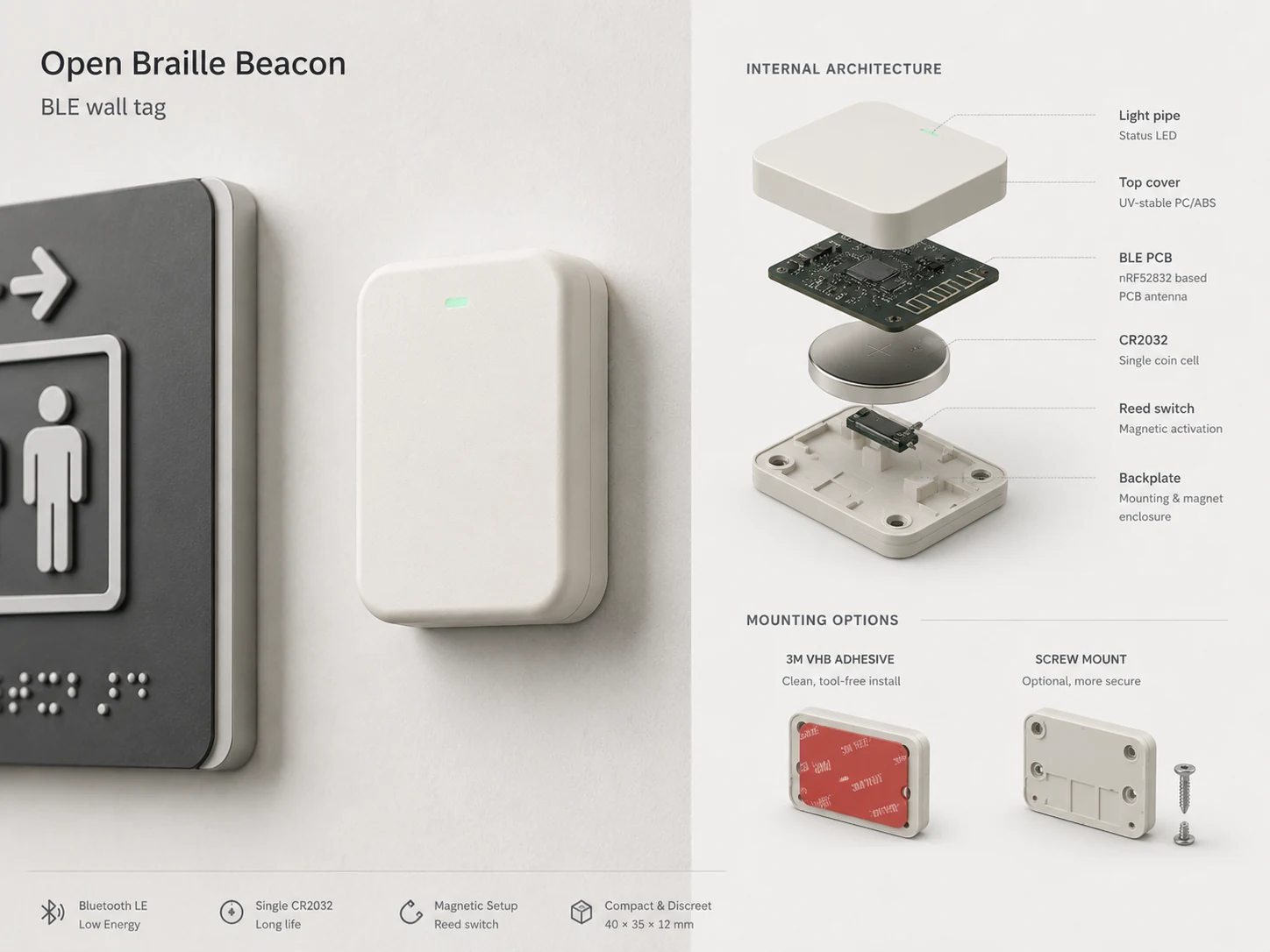
A compact BLE tag sits beside an existing tactile point of interest. It advertises a small identifier and minimal metadata—without sound, cloud services, or tracking.
HAPTIC RECEIVER CLIP
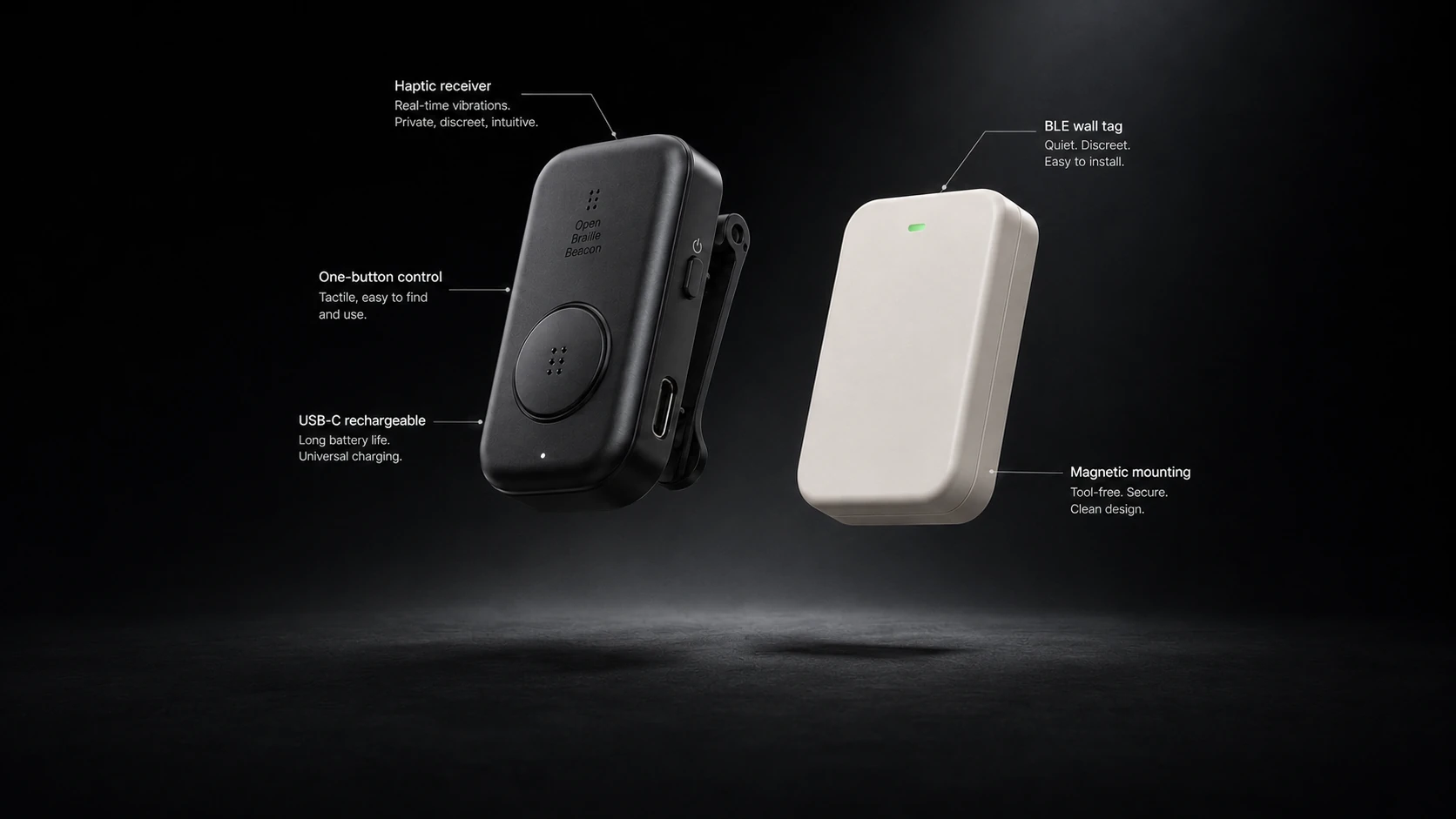
A wearable receiver scans a space, lets the user select one compatible tag, then uses haptics as the selected signal becomes stronger.
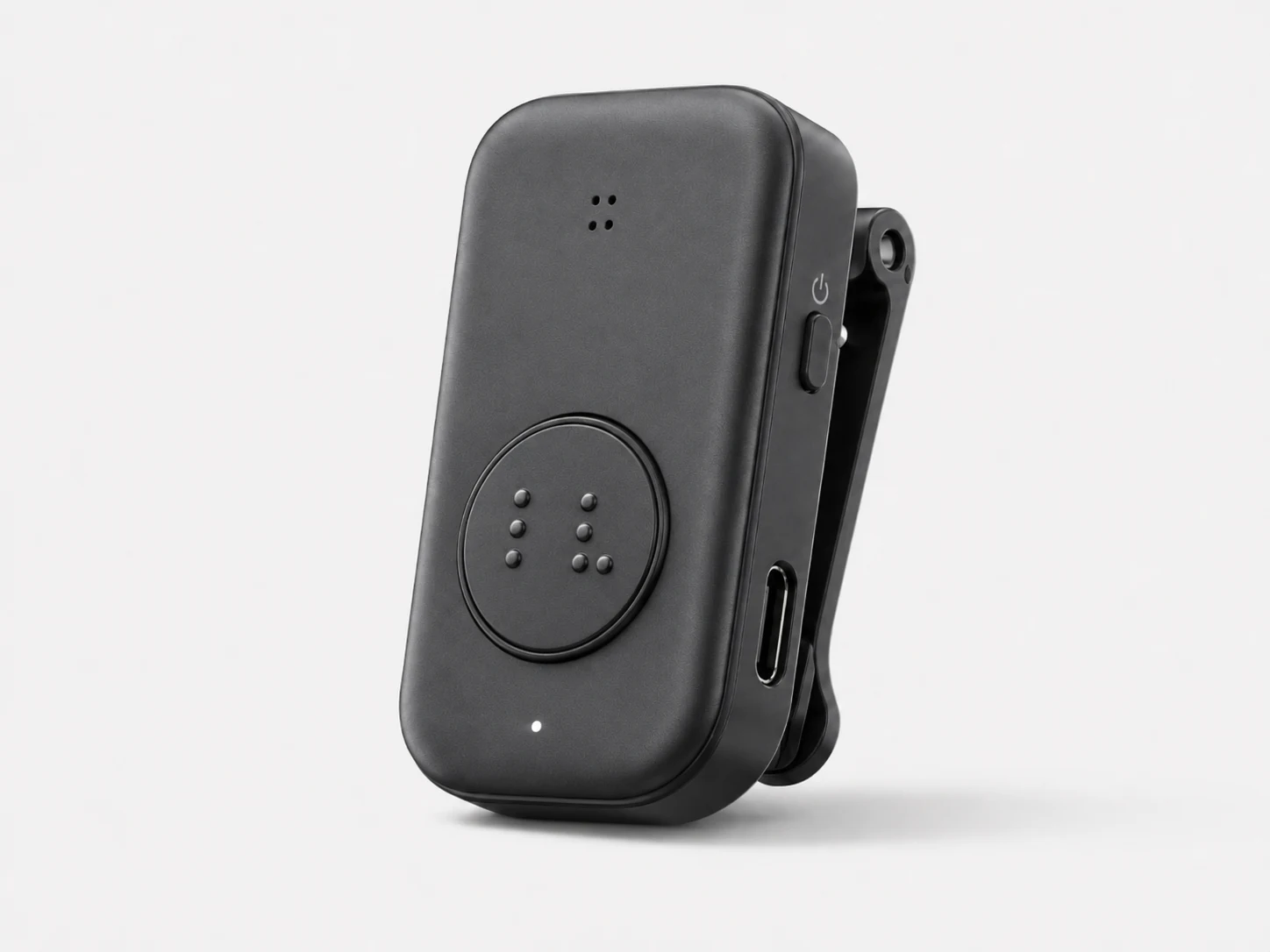
Guide mode intentionally ignores every unselected beacon. Haptic feedback stays private, local, and focused on the destination the user chose.
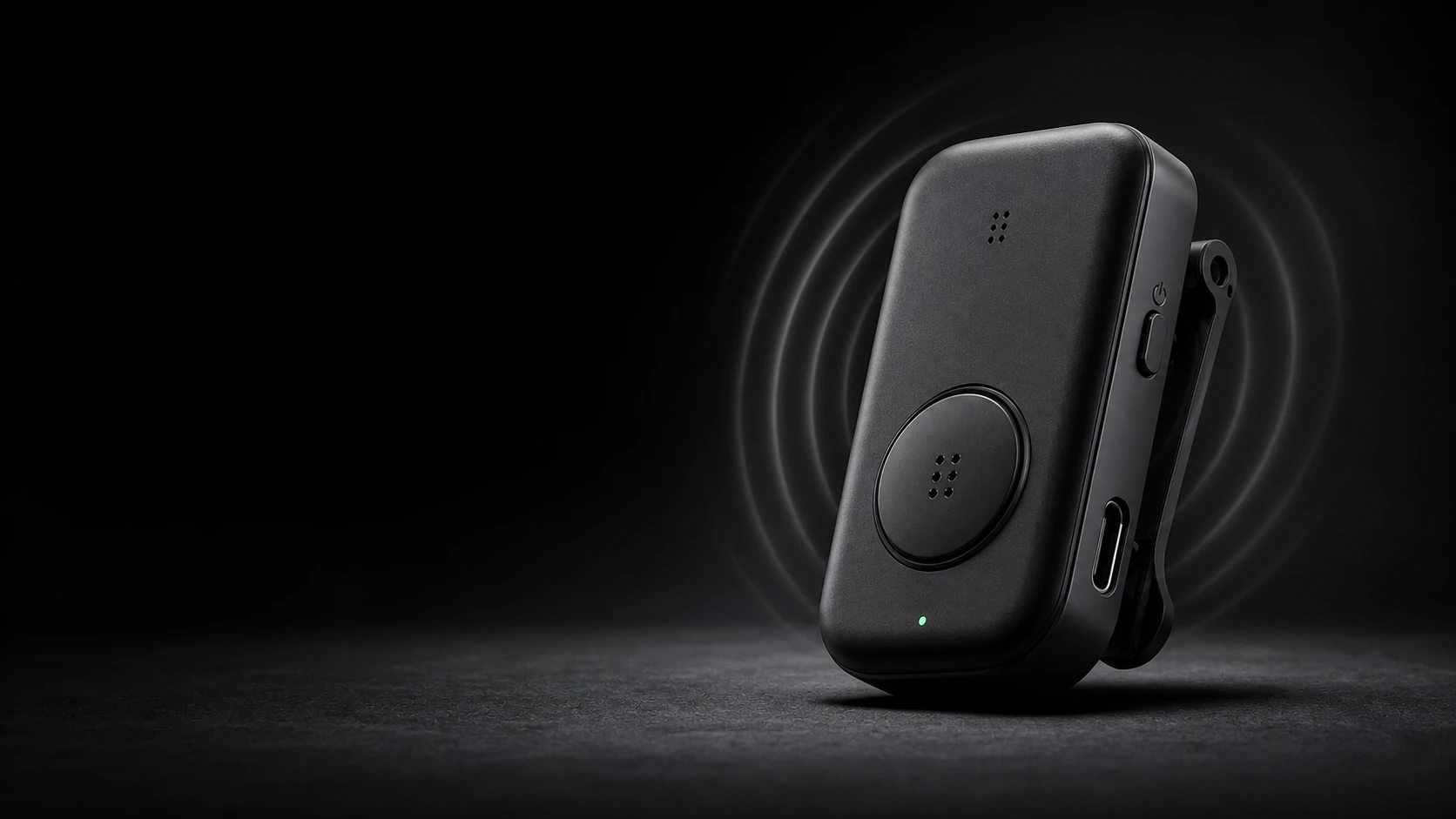
HAPTIC, NOT CONSTANT AUDIO
The receiver can shift from slow to faster pulses as the approximate signal of the selected tag changes.
01
ROOM SCAN
Detect compatible beacons nearby. Nothing guides the user yet.
02
ONE TARGET
Short press cycles choices. Long press confirms one destination.
03
GUIDE MODE
Only the selected tag drives haptics: far, medium, near.
04
STANDBY
A distinct pattern marks arrival. Long press cancels at any time.
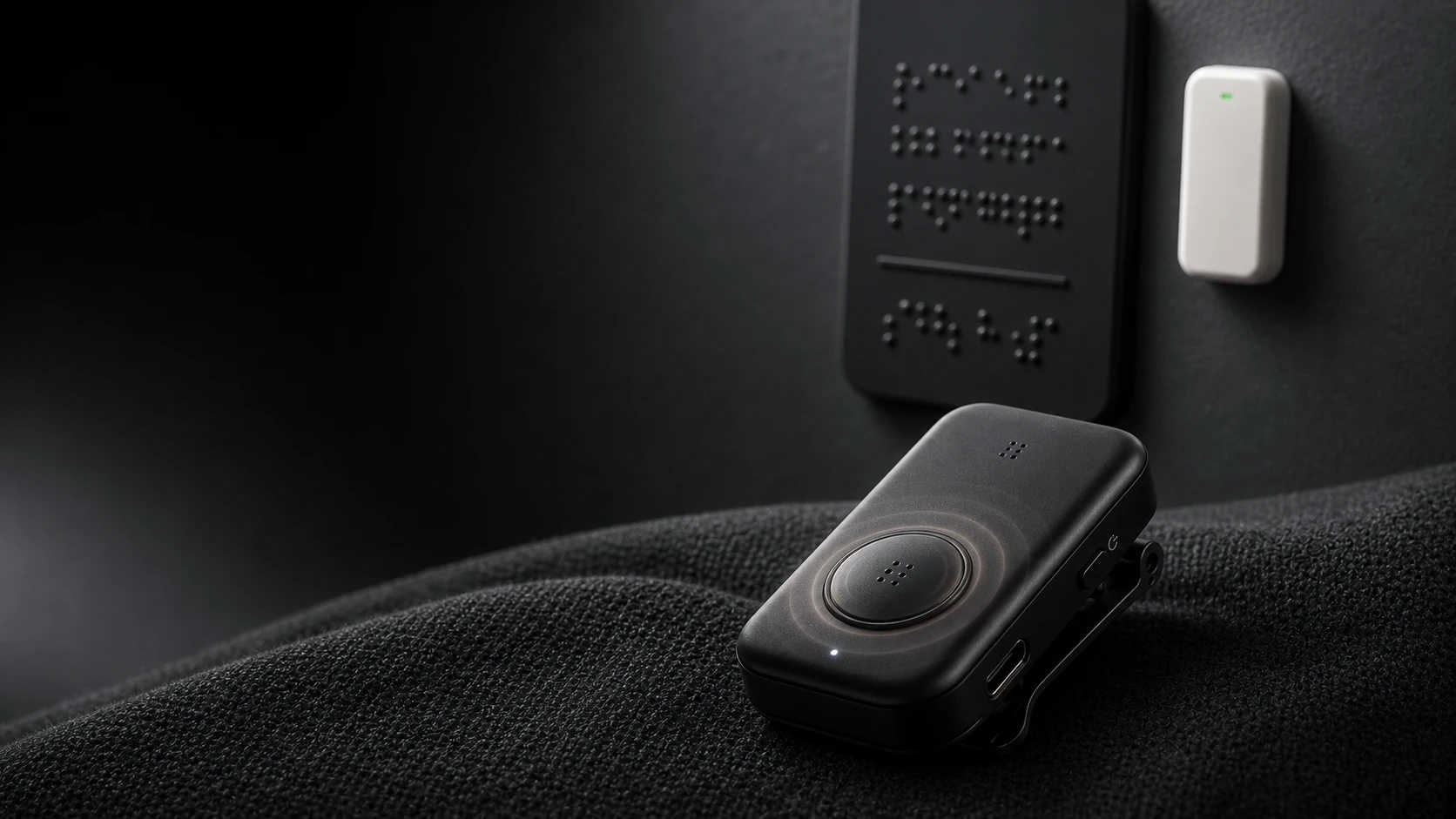
A SELECTED SIGNAL, NOT A CROWD OF ALERTS
Many tags may exist in a room. Only the selected tag shapes the haptic pattern during guide mode.
Open Braille Beacon is at the concept-and-roadmap stage. The work below is documented in the repository so the path to a bench-tested prototype stays inspectable.
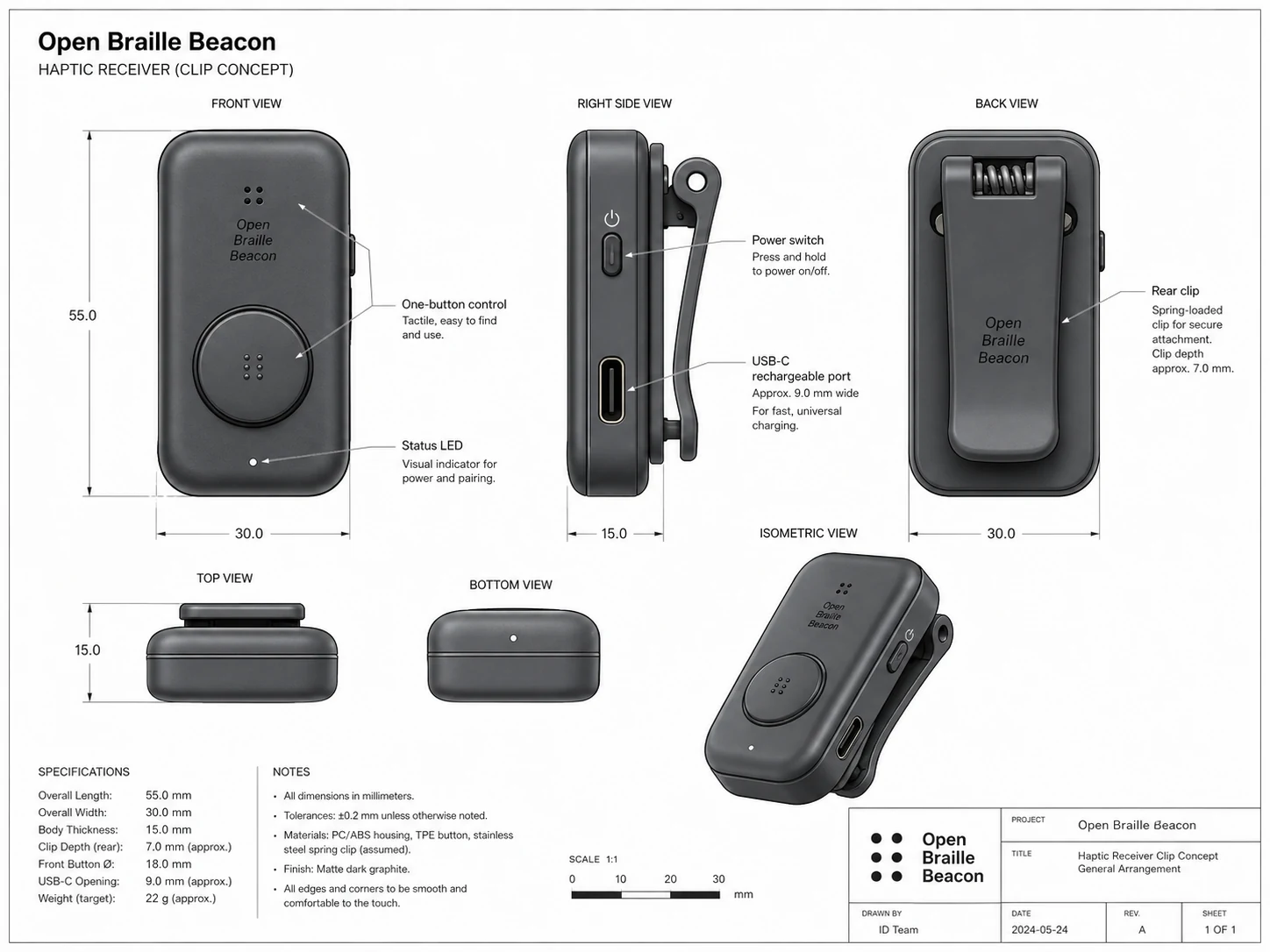
Compact BLE fields and selected-tag behavior are specified.
Tag enclosure models are available as working source.
The one-button, single-target v1 flow is defined.
Fit, power, signal stability, and haptic behavior still need physical testing.
06 / WHAT FUNDING UNLOCKS
NEXT
BUILD
Funding will cover the small, real parts needed to move from specification to evidence: BLE modules, tag power hardware, a receiver development board, a haptic motor with its proper driver, fit-test prints, and signal-validation fixtures.
The goal is not a polished promise. It is repeatable hardware evidence, clear limits, and an open record of what works next.
07 / BUILD IN THE OPEN
Contributions are welcome across CAD, BLE and firmware, practical hardware testing, documentation, and accessibility review.